
The Homeowner’s Guide to Retaining & Seating Walls in Central PA
Read Time: 12 min
If you live in Shippensburg, Chambersburg, or Carlisle, you know that our local terrain is rarely flat. Whether you’re dealing with a sloped backyard that washes out every time we get a heavy Central PA rain, or you’re looking to turn a steep hill into a functional patio space, walls are often the unsung heroes of the landscape.
But a wall in Pennsylvania has a hard life. Between our heavy clay soils and the relentless freeze-thaw cycles of our winters, a poorly built wall won’t just shift—it will eventually fail. At ProLawn Landscaping, we believe a wall should be more than just a barrier; it should be a structural asset that adds both safety and “outdoor room” comfort to your home.
TL;DR / Quick Summary
Retaining walls provide essential structural support for sloped yards, while seating walls add functional “outdoor room” comfort to patios and fire pits.
Key Takeaways:
- Proper drainage (clean stone and weep holes) is the #1 factor in wall longevity.
- Walls over 4 feet in PA typically require an engineer’s seal for safety and compliance.
- Seating walls should be 18–20 inches high for optimal guest comfort.
- Segmental retaining walls (SRW) offer the best flexibility for PA’s freeze-thaw climate.
Understanding the Two Types of Walls
While they often use similar materials, retaining walls and seating walls serve very different purposes in your landscape design.
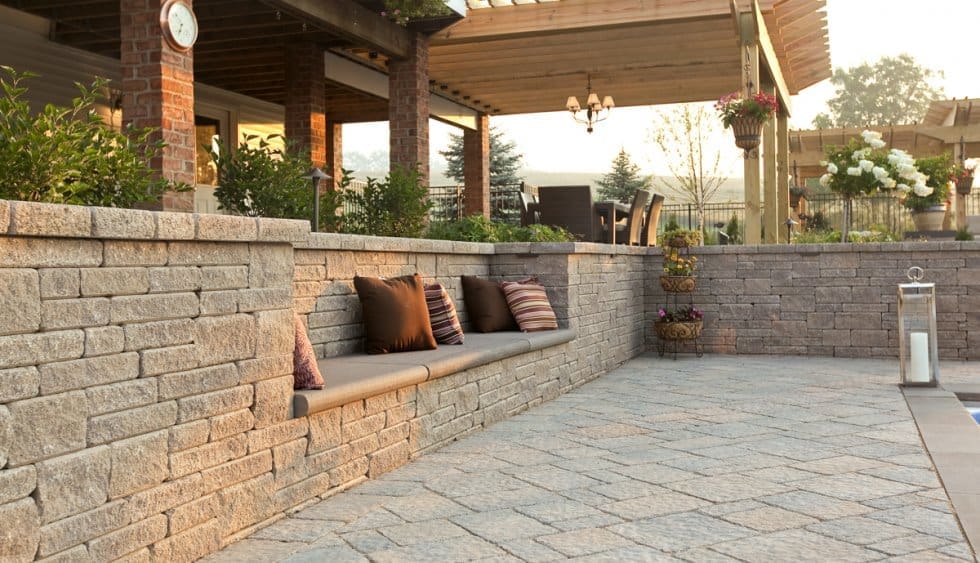
Structural Retaining Walls: Holding Back the Earth
A structural retaining wall is designed to resist the lateral pressure of soil. In our region, where limestone and clay are common, these walls must be engineered to handle significant weight, especially when wet.
- Purpose: Creating level ground, preventing erosion, and protecting foundations.
- Key Feature: Integrated drainage systems and geogrid reinforcement for taller structures.
Seating Walls: Creating the “Outdoor Room”
Seating walls (or “sitting walls”) are usually double-sided and built at a height that allows them to double as permanent furniture.
- Purpose: Defining the perimeter of a patio, surrounding a fire pit, or providing overflow seating for guests.
- Key Feature: Smooth “cap” stones that provide a comfortable surface for sitting. These walls are often the first step in designing a custom outdoor kitchen and dining area because they provide the necessary boundary and social seating for the chef and guests alike.
Maximizing Utility in Every Yard
One of the biggest benefits of wall installation is the ability to reclaim “lost” space. If you have a steep bank that is impossible to mow or a small backyard that feels cramped, walls are the solution. By terracing a slope, you can transform small or awkward outdoor spaces into multi-level gardens or functional entertainment zones.
The Anatomy of a Long-Lasting Wall
In our experience, the walls that fail in Central PA almost always fail because of what you can’t see. Here is the technical standard we follow to ensure your investment stays upright for decades.

1. The Foundation (The Base)
We excavate a trench and fill it with 6–12 inches of compacted 2A modified crushed stone. We aim for 95% standard Proctor density. If the base isn’t compacted correctly, the wall will “smile” or “frown” (sag or lift) within two seasons.
2. Drainage: The “Why” Behind the Wall
Hydrostatic pressure—the weight of water trapped behind a wall—is the leading cause of wall collapse. To prevent this, we use:
- Clean Stone Backfill: At least 12 inches of clean, angular stone behind the wall to allow water to drop straight down.
- Perforated Pipe: A “toe drain” at the base of the wall to move that water away from the structure.
- Weep Holes: Small gaps that allow moisture to escape rather than build up pressure.
3. The Batter (The Lean)
A structural wall shouldn’t be perfectly vertical. It should “batter” or lean back into the hill slightly (usually 1 inch for every 1 foot of height). This allows the wall to work with gravity rather than against it. Our team specializes in these professional hardscaping services to ensure that every structural element we build is as durable as it is beautiful.
Material Selection: Choosing the Right Look and Strength
When selecting materials, you have three primary options in Central PA, each with its own set of pros and cons.
- Segmental Retaining Wall (SRW) Blocks: These are the “workhorses” of modern hardscaping. They are engineered concrete blocks that interlock. Because they are a “dry” system (no mortar), they can flex slightly during the winter.
- Natural Stone: Whether it’s fieldstone or stacked flagstone, nothing beats the look of real stone. However, it requires a much higher level of skill to ensure the “fit” is tight enough to remain stable.
- Poured Concrete with Veneer: This involves a solid concrete core with a thin stone “skin” on the outside. It looks high-end but is the most susceptible to cracking if the footer isn’t deep enough.
For a deeper look at how these materials compare in terms of durability and style, you can check out our comprehensive guide to pavers and natural stone.

Investment and Value: What Influences the Cost?
A retaining wall is a significant investment in your property’s infrastructure. While it’s tempting to look only at the price per square foot, several factors will influence your total hardscaping costs, including:
- Accessibility: Can we get a skid-steer into the backyard, or does everything need to be moved by hand?
- Soil Type: Heavy clay requires more excavation and more expensive backfill stone than sandy soil.
- Height: Once a wall crosses the 4-foot mark, the cost increases significantly due to the need for geogrid reinforcement and engineering seals.
What You Can Handle vs. When to Call a Pro
Hardscaping is rewarding, but the stakes are high when you’re moving tons of earth and stone.
Tasks Most Homeowners Can Do
- Small Garden Borders: Walls under 12 inches that are purely decorative.
- Dry-Stacking Small Stones: For low-impact flower beds where failure doesn’t risk property damage.
Tasks for Confident DIYers
- Straight Seating Walls: If you have a level concrete patio already, building a 2-foot seating wall is a manageable weekend project with the right adhesive.
When to Call a Professional
- Walls Over 3 Feet: The weight of the soil becomes dangerous at this height.
- Foundation Proximity: If the wall is within 10 feet of your home or a neighbor’s property line.
- Tiered Wall Systems: These require complex calculations to ensure the top wall doesn’t crush the bottom one.
- Red Flags: If you see “bowing” in an existing wall or large cracks in the mortar, these are signs of imminent structural failure.
Common Retaining Wall Mistakes to Avoid
1. Using the Wrong Backfill
What people do wrong: Filling the space behind the wall with the dirt they just dug out. Why it’s a problem: Dirt holds water like a sponge. When that water freezes, it expands and pushes the wall over. The right approach: Always use clean, 3/4-inch crushed stone for backfill.
2. Skipping the Cap Stone
What people do wrong: Leaving the top “core” of the blocks exposed. Why it’s a problem: Water gets into the blocks, freezes, and shatters the concrete from the inside out. The right approach: Use a high-quality concrete adhesive to secure a solid cap stone that sheds water away from the wall’s interior.
Long-Term Care and Maintenance
Even the best-built wall needs a little TLC to survive the Pennsylvania climate. Because our region experiences dramatic temperature swings, specific seasonal maintenance is required to ensure your wall doesn’t succumb to “frost heave.”
- Spring Inspection: Check for any new “tilting” or stones that have come loose from their adhesive.
- Drainage Clearing: Ensure your weep holes and drain pipe outlets aren’t clogged with mulch or debris.
- Cleaning: Use a pH-neutral cleaner for natural stone to avoid etching the surface.
Conclusion
A well-built wall is the backbone of a great backyard. Whether you need to reclaim a steep hill in Carlisle or want to add a cozy seating area around your fire pit in Shippensburg, focusing on the “invisible” details like drainage and base compaction is what makes the difference.
If you’re looking at a slope in your yard and aren’t sure if you need a structural fix or just a lifestyle upgrade, contact us for a free consultation. We’ve been building across Cumberland and Franklin counties for years, and we’d love to help you plan a space that lasts.
Frequently Asked Questions
Do I need a permit for a retaining wall in Shippensburg?
In most Central PA municipalities, walls under 4 feet do not require a building permit, but setbacks from property lines still apply. Always check with your local township office before excavating.
How high should a seating wall be?
The standard “comfortable” height for a seating wall is 18 to 20 inches. This mimics the height of a standard chair and is comfortable for most adults.
What is the best material for a retaining wall in PA?
Segmental Retaining Wall (SRW) blocks are excellent for our climate. They are “flexible” systems that can move slightly with the freeze-thaw cycle without cracking, unlike rigid poured concrete.
How long does a professional retaining wall last?
When built with a proper compacted base and drainage, a professional wall should easily last 25 to 50 years.
Can I add lighting to my seating wall?
Yes! “Under-cap” LED lighting is a popular addition. It provides safety for walkways and creates a beautiful ambient glow for evening gatherings.
Sources:
- Concrete Masonry & Hardscapes Association (CMHA) — Technical building solutions and industry standards for segmental retaining wall (SRW) systems.
- Cumberland County Conservation District — Official local resources for erosion and sediment control standards in Cumberland County, PA.
Serving Shippensburg, Chambersburg, Carlisle, Greencastle, and surrounding Central Pennsylvania areas.