
Read Time: 11 min
As the evenings warm up in Shippensburg and Carlisle, the backyard becomes the center of the home. But a truly great outdoor space needs a focal point—something that draws people in long after the sun goes down. Whether it’s the nostalgic crackle of a wood-burning fire or the modern, push-button ease of a gas fire feature, adding fire to your landscape is about more than just heat; it’s about creating a destination.
At ProLawn Landscaping, we’ve seen how a well-placed fire pit can transform a simple patio into a year-round retreat. However, in Central Pennsylvania, a fire feature has to be built to withstand our heavy humidity and freezing winters. Choosing the right materials and placement is the difference between a feature you use every weekend and one that sits neglected.
TL;DR / Quick Summary
Choosing between a fire pit and an outdoor fireplace depends on your goals for privacy, budget, and the type of “vibe” you want to create.
Key Takeaways
- Wood-burning pits offer a traditional experience but require more maintenance and cleanup.
- Gas fire features provide instant ambiance and are safer for use near structures.
- Proper placement (at least 10–15 feet from structures) is essential for safety and local compliance.
- Integrating seating walls creates a permanent “outdoor room” feel and maximizes guest comfort.
Table of Contents
Fire Pit vs. Outdoor Fireplace: Which is Right for You?
The first decision most homeowners face is the form the fire feature will take.
The Fire Pit: Social and Versatile
Fire pits are designed for 360-degree interaction. They are perfect for larger groups where everyone wants a “front-row seat” to the flames.
- Best for: Social gatherings, roasting marshmallows, and smaller budgets.
- Design Tip: Circular pits encourage conversation, while square pits offer a more modern, architectural look.

The Outdoor Fireplace: The Architectural Statement
An outdoor fireplace acts as a structural anchor. It creates a “living room” feel and can act as a windbreak or a privacy screen from neighbors.
- Best for: Privacy, high-end aesthetics, and creating a definitive “end” to a patio space.
- Design Tip: Fireplaces are the perfect companion for fully custom outdoor kitchens, as they provide a vertical element that balances the horizontal lines of countertops.

Fire and Water: The Ultimate Backyard Balance
While fire provides warmth and a social focal point, many homeowners find that the ultimate backyard oasis requires a balance of elements. There is a unique tranquility that comes from pairing the dancing flames of a fire pit with the soothing sound of moving water.
If you find yourself drawn to the idea of a “fire and water” landscape, stay tuned for our upcoming June guide, where we will dive deep into how to integrate pondless waterfalls and fountains into your hardscape design to create a multi-sensory retreat.
Gas vs. Wood-Burning: The Great Debate
In Central PA, your choice of fuel impacts how often you’ll actually use your fire feature.

Wood-Burning: The Classic Experience
There is no substitute for the smell and sound of a real wood fire.
- Pros: Lower initial cost, higher heat output, and a traditional “campfire” feel.
- Cons: Requires wood storage, takes time to start/extinguish, and produces smoke that can be bothersome on breezy nights.
Gas-Fed: The Modern Convenience
Gas fire pits (Propane or Natural Gas) have surged in popularity for homeowners who want ambiance without the work.
- Pros: Instant on/off, no smoke, no ash cleanup, and safer for use under pergolas or near the house.
- Cons: Higher upfront cost (requires a gas line or tank storage) and lower heat output compared to a large wood fire.
Safety and Placement in Central PA
Before we move a single stone, we have to consider safety. In counties like Cumberland and Franklin, local ordinances often dictate where fire can be placed.
- The 10-Foot Rule: At a minimum, any open-flame fire pit should be at least 10–15 feet away from your home, deck, or overhanging trees.
- Surface Matters: Never place a fire pit directly on a wooden deck or directly on grass. A non-combustible base—like a professionally installed paver patio—is essential to prevent accidental fires.
- Wind Direction: We analyze the prevailing winds on your property to ensure smoke isn’t constantly blowing into your back door or your neighbor’s open windows.
Elevating the Design with Seating Walls
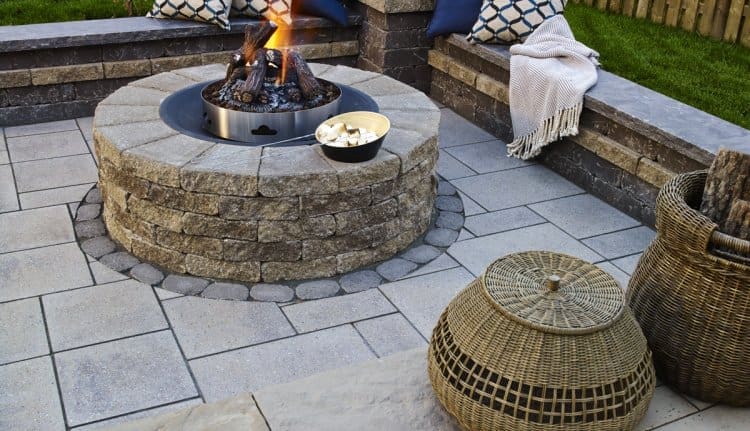
A fire pit without seating is just a hole in the ground. While Adirondack chairs are a classic choice, they can be cumbersome to move and store. This is where integrating permanent seating walls makes a massive difference.
- Comfort: We build seating walls at a height of 18 inches, which is the “sweet spot” for guest comfort.
- Structure: A seating wall defines the fire pit area as a distinct “room,” making the space feel intentional rather than scattered.

What You Can Handle vs. When to Call a Pro
Tasks Most Homeowners Can Do
- Portable Fire Bowls: Metal or “store-bought” fire bowls that can be moved around.
- Basic Wood Storage: Building a simple rack to keep your firewood dry and off the ground.
Tasks for Confident DIYers
- Dry-Stack Fire Pit Kits: Many local supply yards sell “ring kits.” If you have a level, non-combustible surface, these can be a fun weekend project.
When to Call a Professional
- Gas Line Installation: Any project involving natural gas or propane lines must be handled by a licensed professional to prevent leaks and explosions.
- Custom Masonry: If you want a fireplace that matches your home’s stone veneer or a pit integrated into a multi-level patio.
- Drainage Issues: Fire pits can collect water like a basin. A professional ensures there is a drainage path so your pit doesn’t turn into a pond after a PA thunderstorm.
Common Fire Feature Mistakes to Avoid
Using Non-Fire-Rated Stone
What people do wrong: Using standard river rocks or “wet” stones to ring the fire.
Why it’s a problem: Trapped moisture inside non-rated stones can expand rapidly when heated, causing the stones to pop or even explode.
The right approach: Use fire-rated bricks or lava rocks designed to handle high temperatures.
Poor Airflow Design
What people do wrong: Building a wood-burning pit that is completely solid with no air intake.
Why it’s a problem: Fire needs oxygen. Without airflow, you’ll get a smoldering, smoky mess instead of a bright flame.
The right approach: We integrate small “vent” gaps in the bottom layer of stone to keep the fire fed and the smoke to a minimum.
Conclusion
A fire feature is more than just a place to stay warm; it’s the heart of your outdoor living space. Whether you’re looking for the architectural elegance of a stone fireplace or the social circle of a paver fire pit, the key is to design for your specific lifestyle and the unique climate of Central Pennsylvania.
If you’re ready to stop dreaming and start building your backyard retreat, contact us for a free consultation. We’ve helped homeowners across Shippensburg and Carlisle turn their yards into destinations, and we’d love to do the same for you.
Serving Shippensburg, Chambersburg, Carlisle, Greencastle, and surrounding Central Pennsylvania areas.
Frequently Asked Questions
Can I put a fire pit on my existing paver patio?
Yes, but it’s important to check if the pavers are heat-rated. We often recommend adding a protective “fire ring” or a layer of fire brick to protect the underlying pavers from cracking.
How much does a custom fire pit cost?
While hardscaping costs vary based on materials, a custom-built stone fire pit typically starts at a higher price point than a store-bought bowl but offers significantly better longevity and property value.
Do I need to cover my fire pit in the winter?
In Pennsylvania, yes. Snow and ice sitting inside a fire pit can accelerate the wear on the stone and mortar. A simple weather-proof cover will extend the life of your feature by years.
Which is better for heat: Gas or Wood?
Wood-burning fires generally produce more radiant heat, making them better for very cold nights. Gas features provide enough heat for a chilly spring evening but are primarily chosen for their ambiance and convenience.
How far should a fire pit be from my house?
Most local safety guidelines recommend a minimum of 10 to 15 feet from any combustible structure, including your home, shed, or wooden fence.
Sources:
- Concrete Masonry & Hardscapes Association (CMHA) — Technical standards for outdoor fire feature construction and heat-resistant masonry.
- National Fire Protection Association (NFPA) — Safety standards for outdoor fire pits and fireplaces.