
Avoid These Hardscaping Installation Mistakes
Hardscape failures often stem from planning gaps, poor base work, inadequate drainage, or incorrect material choices, leading to settlement, cracking, and early replacement. This guide highlights common mistakes and offers practical fixes for durable hardscaping in freeze-thaw climates like Pennsylvania.
Common Planning and Design Mistakes
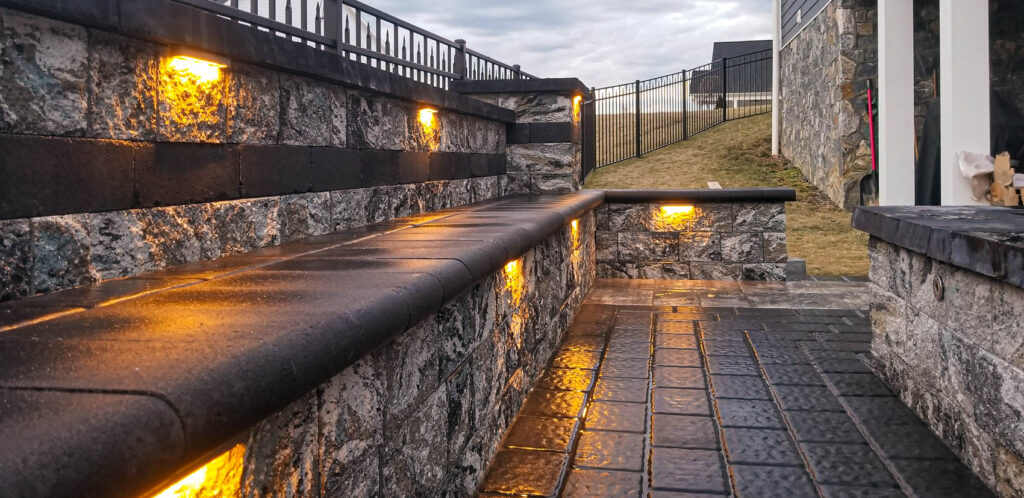
Planning mistakes trigger problems during construction and long-term upkeep, often from skipping site analysis, missing permit checks, or underestimating drainage. Fixing these early cuts rework and improves safety.
- Skipping detailed site analysis: Do soil tests and slope surveys before layout.
- Failing to set realistic budgets and timelines: Build a phased budget with contingency funds.
- Ignoring scale and local climate: Size features appropriately and pick materials rated for freeze–thaw.
- Omitting permit or HOA checks: Confirm setbacks and permit needs early.
- Not planning for drainage and maintenance access: Establish low points, outlets, and access paths in design.
| Planning Item | Importance | Recommended Action / Timing |
|---|---|---|
| Site survey (slope, utilities) | High | Complete before final design; include utility locate and grade plan |
| Soil testing (bearing, type) | High | Test before specifying base depth or wall reinforcement |
| Budget contingency | Medium | Allocate 10-20% contingency during design phase |
| Permit/HOA review | High | Verify setbacks and submit permit applications early |
| Drainage strategy | High | Design grading and outlet paths in concept stage |
Key Installation Errors and Prevention
Most structural failures result from installation mistakes: too-shallow bases, poor compaction, missing edge restraints, and weak drainage. Prevent these with numeric base standards, clear compaction targets, and appropriate drainage components.
- Poor base preparation: Excavate to correct depth; use 3/4″ crushed stone compacted to 95% standard Proctor density (4–12 inches depending on use).
- Incorrect drainage and grading: Maintain 1%–2% slope away from structures; add French drains or catch basins at collection points.
- Skipping edge restraints: Fit rigid edge restraints to stop lateral movement.
- Improper jointing and sand selection: Use polymeric or proper joint sand for the paver type.
- Retaining wall oversights: Provide drainage (weep holes/French drains) behind walls; specify geogrid for walls over 4 feet.
| Hardscape Type | Base Specification | Compaction / Notes |
|---|---|---|
| Walkway (pedestrian) | 4–6 in crushed stone base | Compact to 95% Proctor; geotextile for poor soils |
| Patio (entertaining) | 6–8 in crushed stone base | Add 1 in. bedding sand; edge restraints required |
| Driveway (light vehicles) | 8–12 in crushed stone base | Heavy compaction; consider geogrid for weak subgrade |
Material Choices for Hardscape Longevity
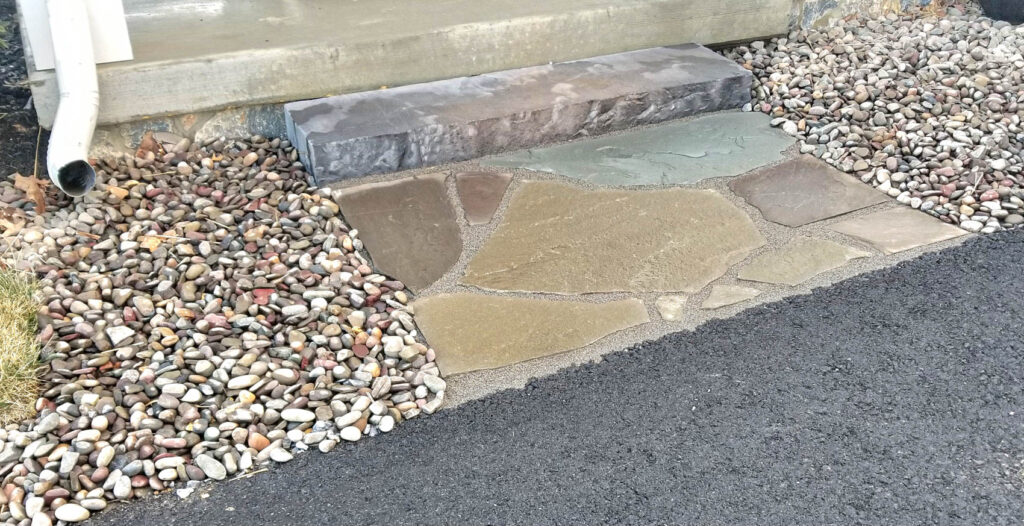
Material choice impacts freeze–thaw resistance, maintenance, and long-term cost. For Pennsylvania’s climate, dense, low-absorption materials are crucial.
| Material | Durability (typical) | Freeze-Thaw Resistance / Maintenance |
|---|---|---|
| Concrete pavers | High | Good when dense and sealed; simple joint maintenance |
| Natural stone | High to very high | Excellent when dense; may need sealing and anti-stain care |
| Stamped concrete | Moderate | Vulnerable to cracking in severe freeze-thaw unless reinforced and sealed |
For freeze–thaw durability, dense concrete pavers or sealed, low-absorption natural stone are usually best. Stamped concrete needs strict base and control-joint plans. Always verify product quality by checking density and absorption specs, and follow manufacturer installation guidance.
When to Hire a Professional
Deciding between DIY and professional installation depends on project complexity, risk, and long-term value. Professionals bring calibrated equipment, local soil experience, and expertise in designing durable drainage systems.
- Complex grading or exposed foundations: Hire a professional.
- Retaining walls over 4 feet or structural walls: Hire a professional.
- Simple walkway or small patio on stable ground: DIY may be reasonable with proper guidance.
- Any project requiring permits or HOA approval: Consult a professional to ensure compliance.
Professional installation ensures long-term performance through thorough site analysis, base design matched to soil, mechanical compaction, integrated drainage, and climate-appropriate material selection. For projects beyond basic DIY, a professional consultation is recommended.
Frequently Asked Questions
What is the most common hardscaping mistake?
Poor base preparation and inadequate drainage are frequently cited as the leading causes of hardscape failure, especially in freeze-thaw climates. Ensuring proper excavation, material, and compaction for the base is critical.
When should I hire a professional for hardscaping?
It’s highly recommended to hire a professional for complex projects involving significant grading, retaining walls over 4 feet, structural elements, or any project requiring permits. Their expertise ensures compliance and long-term durability.
What materials are best for freeze-thaw climates?
Dense concrete pavers and low-absorption natural stone are generally recommended due to their superior resistance to freeze-thaw cycles. Always check product specifications for density and absorption rates to ensure suitability.
Conclusion
Avoiding common hardscaping mistakes through proper planning, smart material choices, and professional help ensures an attractive, long-lasting outdoor space that withstands Pennsylvania’s climate. Consult ProLawn & Landscaping to explore resources for planning a durable hardscape.